
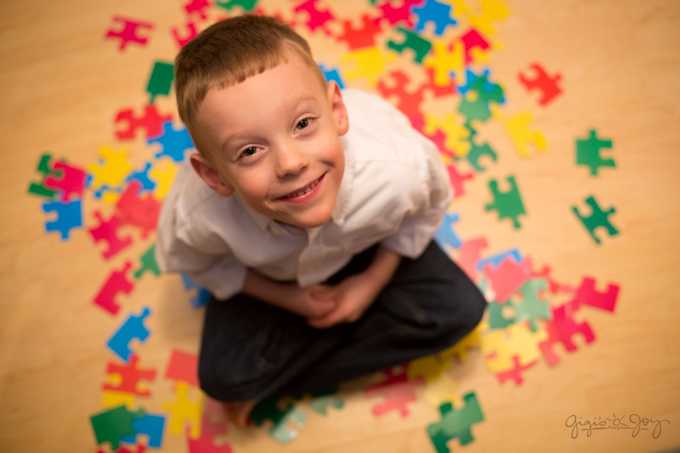
Receiving an autism spectrum disorder (ASD) diagnosis for your child brings many questions — and for many families, one of the first is: what does speech therapy actually work on, and how does it help? Understanding the goals of ASD speech therapy can help parents become active, informed partners in their child’s communication development.
At Speech Therapy Centres, our registered speech-language pathologists (SLPs) provide individualised ASD therapy across Ontario — in Aurora, Newmarket, Markham, Thornhill, Mississauga, Brampton, Burlington, Ajax, Oshawa, Pickering, Ottawa, and virtually province-wide. This guide walks parents through the most common speech therapy goals for children with autism, how they are set, and what progress can look like.
Why Speech Therapy Is a Core Part of ASD Support
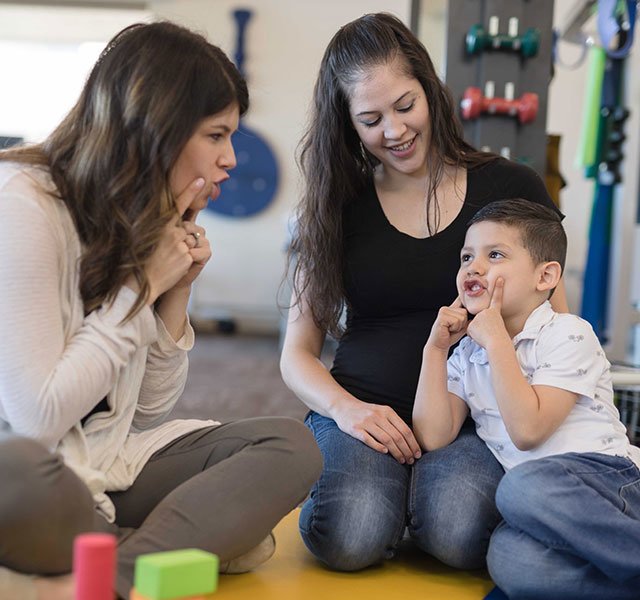
Communication challenges are one of the defining features of autism spectrum disorder — but they look very different from one child to the next. Some children with ASD are non-speaking or minimally verbal. Others speak fluently but find social communication — reading between the lines, maintaining a conversation, understanding what others feel — genuinely difficult. Still others have strong language skills but struggle with specific aspects of pragmatics, prosody, or sensory processing that affect how they communicate.
Speech-language pathology is uniquely equipped to address this full range of communication profiles. SLPs do not use a single method or curriculum for all children with autism — they complete detailed assessments to understand each child’s specific communication profile and design therapy goals that are meaningful, achievable, and family-centred. Learn more about our autism spectrum disorder (ASD) speech therapy services and how our team supports children from diagnosis through school age and beyond.
The Canadian Physiotherapy Association — through Speech-Language & Audiology Canada (SAC-OAC) — recognises speech-language pathology as an essential component of early intervention for ASD, with the strongest evidence supporting intensive, individualised, and family-involved therapy programs begun as early as possible.
How ASD Speech Therapy Goals Are Set
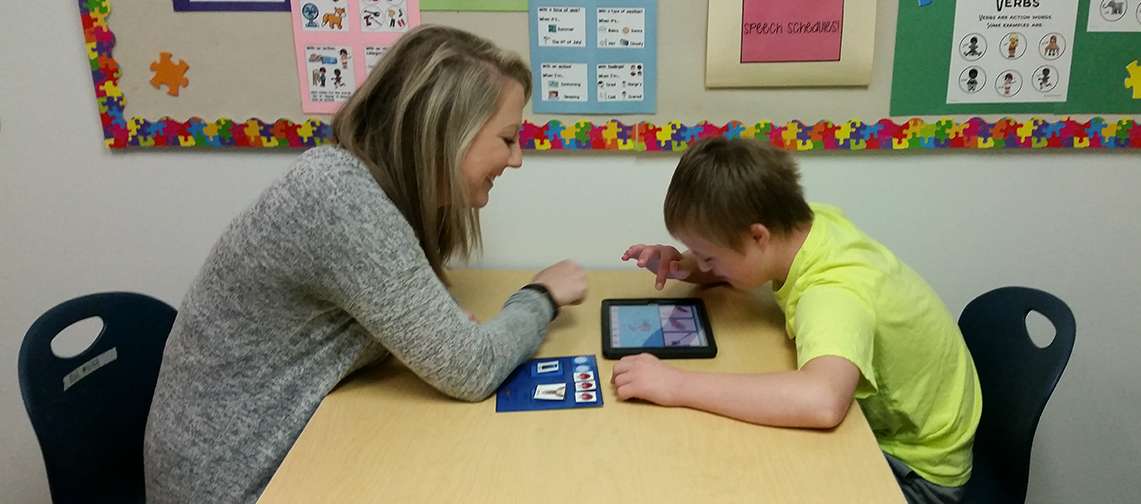
Before any goals are established, your child’s SLP will complete a comprehensive communication assessment. This typically includes standardised language and communication tests, structured observation of how your child communicates in different contexts, parent interview and questionnaire (you know your child best — this information is essential), and review of any prior assessments, reports, or school plans.
From this picture, the SLP identifies the areas of communication that will make the greatest real-world difference for your child — and works with your family to set goals that are specific, measurable, and tied to everyday life rather than abstract skill levels.
Goals are reviewed regularly throughout the therapy process and updated as your child develops. What matters is not just what a child can do in the therapy room — but what they can do at home, at school, and with the people they care about.
What is an ASD therapy plan? An ASD therapy plan is an individualized document prepared by your child’s SLP that outlines specific communication goals, the strategies and activities used to work toward them, how progress will be measured, and how parents and caregivers can support the goals at home. Plans are living documents — they change as your child grows.
Goal Area 1: Vocabulary Development
Building a functional vocabulary is often one of the earliest and most important goals in ASD speech therapy — and it looks different depending on whether a child is non-speaking, minimally verbal, or has emerging language.
For Non-Speaking and Minimally Verbal Children
For children who are not yet using spoken words reliably, vocabulary development in speech therapy focuses on building a functional communication system — one that allows the child to express their needs, preferences, and ideas effectively. This often involves augmentative and alternative communication (AAC).
- AAC systems: Picture Exchange Communication System (PECS), high-tech speech-generating devices (SGDs), or robust AAC apps give non-speaking children the vocabulary they need to communicate right now — without waiting for spoken language to emerge. Research is clear that AAC does not reduce motivation to speak; it supports it.
- Core vocabulary: Core words are the small set of high-frequency words (go, want, more, stop, help, I, you, here, different) that account for the majority of communication across all contexts. Building core vocabulary through AAC and naturalistic teaching provides a flexible foundation.
- Aided language input (ALI): SLPs teach parents and caregivers to use the AAC system themselves during daily routines — modelling vocabulary so the child sees the system being used purposefully in real situations.
For Children with Emerging and Developing Language
For children who are building spoken vocabulary, therapy targets not just the number of words known but the ability to use words flexibly — in new contexts, with different partners, and for different communicative purposes.
- Functional vocabulary: Therapy prioritises words the child will use frequently in their daily life — the names of preferred activities, family members, foods, feelings, and objects that matter to them specifically.
- Verb vocabulary: Many children with ASD have stronger noun vocabulary than verb vocabulary. Targeting action words (help, go, eat, play, stop) is particularly important for building sentences and expressing ideas.
- Categorisation and word relationships: Understanding that ‘dog’, ‘cat’, and ‘bird’ are all animals, or that ‘happy’, ‘excited’, and ‘proud’ are all good feelings, builds the semantic network that supports more flexible language use.
Our SLPs use naturalistic developmental behavioural intervention (NDBI) approaches — including strategies from evidence-based ASD therapy models — to build vocabulary in the contexts that are most motivating and meaningful for each child.
Speech-Language & Audiology Canada (SAC-OAC) recommends that vocabulary goals for children with ASD prioritize functional communication — the ability to express wants, needs, and ideas in real contexts — over the acquisition of decontextualised word lists.
Goal Area 2: Conversational Skills
Conversation requires a complex set of skills that many children with ASD find genuinely difficult — not because they are uninterested in others, but because the rules of conversation are largely implicit, highly context-dependent, and hard to learn by observation alone. Speech therapy makes these rules explicit, teachable, and practised.
Turn-Taking
The most fundamental conversational structure is the back-and-forth exchange of turns. For young children, this is often targeted through play — games that have a clear turn structure, joint attention activities, and structured interactions that make the rhythm of exchange visible. For older children, turn-taking is refined in more complex conversational contexts.
Initiating and Responding
Many children with ASD respond to direct questions but rarely initiate conversation with others. Therapy specifically targets both sides of this equation: how to start a conversation (greeting, asking a question, sharing an observation), and how to respond in contextually appropriate ways to different types of initiations from others.
Topic Maintenance and Shifting
Staying on a shared topic — and knowing when it is natural to change topics — is something neurotypical speakers learn implicitly. For children with ASD, these transitions may need to be made explicit. Therapy develops awareness of when a topic has run its natural course, how to introduce a new one, and how to recognize when a conversational partner has moved on.
Asking and Answering Questions
Questionnaire use is clinically significant for children with ASD. Many children are stronger at answering simple factual questions (What is your name? What did you eat?) than at asking questions of their own — particularly social questions (What do you like? Have you ever…?). Building a repertoire of genuine question-asking is an important social communication goal.
Conversational Repair
When communication breaks down — when something is misunderstood or not heard — the ability to repair the exchange is a critical and often underdeveloped skill. Therapy targets strategies like asking for clarification, repeating with modification, and recognising when a partner has not understood.
Digital and Peer Communication
For school-age children and adolescents, therapy increasingly addresses communication in the contexts most relevant to their social lives — navigating group conversations, understanding humour and sarcasm, participating in classroom discussions, and communicating through text and messaging.
Our ASD speech therapy programs at Speech Therapy Centres incorporate structured social communication practice, video modelling, and real-life conversational rehearsal as core components of conversational skills development.
Research cited by SAC-OAC supports social communication intervention — including conversational skills training — as one of the most evidence-based approaches in ASD speech therapy, with meaningful improvements in peer interactions and quality of life reported by families following structured programs.
Goal Area 3: Understanding and Expressing Emotions

Emotional understanding — recognising what others feel, expressing one’s own emotions clearly, and navigating emotionally complex social situations — is an area of genuine challenge for many children with autism. These difficulties are not a matter of empathy or caring; they reflect differences in how the brain processes and integrates the cues that signal emotional states.
Recognising Emotions in Others
The ability to read facial expressions, tone of voice, body posture, and context to infer how another person feels is foundational to social communication. For many children with ASD, these cues are not automatically integrated into an emotional inference — they require explicit teaching.
Speech therapy approaches to emotion recognition include direct instruction using visual supports (emotion cards, video clips, illustrated stories), working through the specific cues associated with different emotional states (furrowed brows and tight lips signal frustration; wide eyes and an open mouth signal surprise), and practising inference in increasingly complex and realistic scenarios.
Labelling and Expressing Personal Emotions
Many children with ASD have difficulty identifying and labelling their own emotional states — a capacity sometimes called alexithymia. They may know they feel ‘bad’ without being able to distinguish whether they are frustrated, sad, anxious, or tired. They may feel overwhelmed by emotion without having the language to communicate it to others.
Therapy builds an emotional vocabulary that goes beyond ‘happy’, ‘sad’, and ‘mad’ — introducing a wider range of emotional words and helping children connect internal sensations to emotional labels. Tools like emotion scales, body mapping activities, and feeling journals support this work in and between sessions.
Perspective-Taking and Theory of Mind
Theory of mind — the understanding that other people have their own thoughts, beliefs, and feelings that may differ from one’s own — is an area of documented difference for many individuals with ASD. Speech therapy approaches this through structured activities that practise perspective-taking: What does this person know? What does this person feel? Why did this person do this?
This is not about making children with autism think like neurotypical people — it is about building the cognitive tools to navigate a world in which understanding others’ perspectives is practically important for communication, friendships, and self-advocacy.
Managing Emotional Regulation in Communication
When emotions are intense, communication often breaks down. Anxiety, frustration, and overwhelm can reduce access to language even in children who are verbally fluent. Part of speech therapy for emotional understanding involves developing strategies for communicating needs and feelings in high-arousal states — including simple phrases, visual supports, or AAC strategies that remain accessible even when verbal communication is more effortful.
What parents can do at home: Narrate emotions throughout the day — your own and your child’s. ‘You look frustrated. The block fell down.’ ‘I feel surprised — I didn’t know you liked that!’ Regular, low-pressure emotional narration builds vocabulary and normalizes emotional talk in ways that generalise beyond the therapy room.
Research reviewed by SAC-OAC supports social-emotional communication interventions as effective components of ASD speech therapy, with evidence showing improved emotion recognition, self-advocacy, and peer interaction following structured programs delivered by registered SLPs.
Additional Speech Therapy Goal Areas for Children with ASD
Vocabulary, conversation, and emotional understanding are three of the most common goal areas — but ASD speech therapy addresses a broader range of communication needs:
Articulation and Speech Clarity
Some children with ASD have speech sound difficulties that reduce how well others can understand them. When speech clarity is a barrier to communication, it becomes a therapy priority alongside language and social communication goals.
Augmentative and Alternative Communication (AAC)
For children who are non-speaking or minimally verbal, AAC — including high-tech devices, picture-based systems, and sign — provides communication access right now. Our SLPs are experienced in AAC assessment and implementation for children with ASD across all of our Ontario locations.
Literacy and Language Comprehension
Reading comprehension — understanding what a text is actually saying, including implied meaning, character motivation, and narrative structure — can be an area of difficulty for children with ASD even when decoding skills are strong. Speech therapy addresses the language comprehension foundations that underlie literacy.
Prosody and Tone of Voice
The melodic, rhythmic, and stress patterns of speech — collectively called prosody — carry enormous amounts of social meaning. Flat or unusual prosody can affect how peers and adults interpret a child’s intentions and feelings. Therapy addresses prosody explicitly when it is a barrier to communication.
Self-Advocacy and Independence
For older children and adolescents, speech therapy increasingly focuses on the communication skills needed for independence: asking for help, explaining one’s own needs, navigating school or workplace conversations, and advocating for accommodations.
Explore our full range of speech-language pathology services for children with ASD, including voice therapy and virtual speech therapy appointments province-wide.
The Parents‘ Role in ASD Speech Therapy
Research is consistent on this point: parent and caregiver involvement is one of the strongest predictors of speech therapy outcomes for children with ASD. The hours a child spends in therapy each week are important — but the hours between sessions, at home, in the car, at the dinner table, at school pickup, are where most communication development actually happens.
At Speech Therapy Centres, we actively involve parents and caregivers in every therapy plan. This includes explaining the goals and the reasoning behind them clearly, modelling strategies during sessions so caregivers can use them at home, providing written home programs with specific activities tied to current goals, and checking in regularly on what is working and what needs adjustment.
You do not need to become a speech therapist to support your child’s communication. You need to understand what the current goals are, what you can do to support them in natural daily routines, and how to celebrate and reinforce the communication your child is already doing.
What Progress Looks Like in ASD Speech Therapy
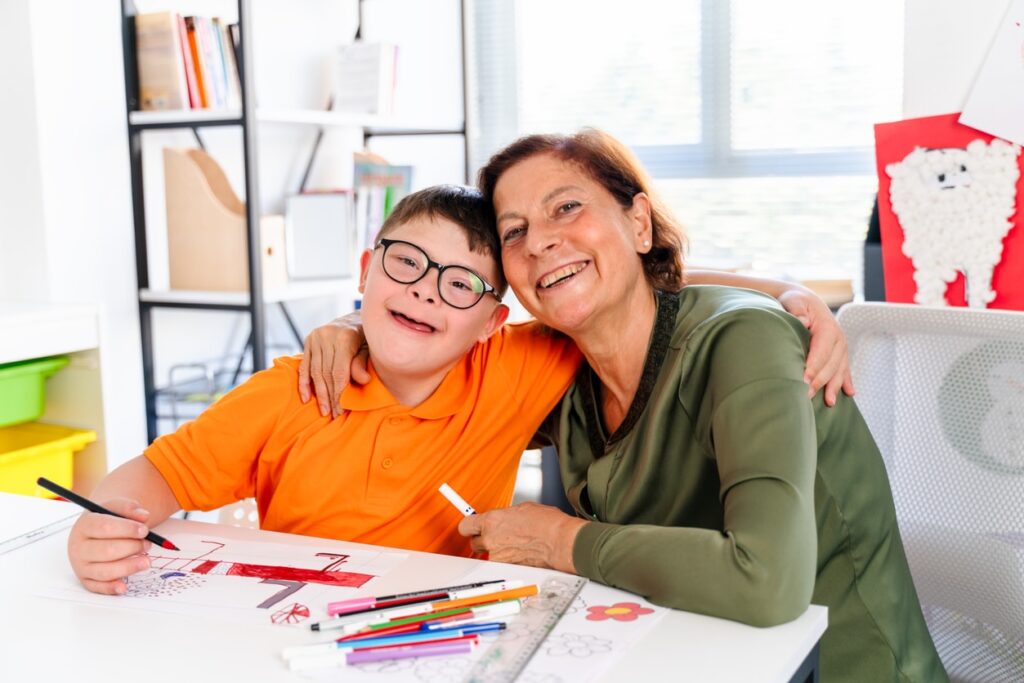
Progress in ASD speech therapy is real — but it rarely looks like a straight line, and it often shows up in unexpected places before it shows up in the ways parents initially hoped for.
- A child who rarely initiates: starts pulling a parent to show them something, or asking ‘What’s that?’ across different settings.
- A child who communicated frustration by melting down starts using a phrase, a picture, or a device to signal ‘I need a break.’
- A child who talked only about one topic: asks a genuine question about what a sibling likes.
- A child who found emotions baffling: notices a friend looks sad and says, ‘Are you okay?’
These moments are not small. They are the goals of speech therapy made real — and they build, over time, into communication profiles that support meaningful relationships, school participation, and a lifetime of connection.
Serving Families Across Ontario. At Speech Therapy Centres, we regularly work with children and families from Aurora, Newmarket, Markham, Thornhill, Mississauga, Brampton, Burlington, Ajax, Oshawa, Pickering, Ottawa, and communities across the GTA and Ontario who are navigating an ASD diagnosis and looking for evidence-based speech therapy support. Our registered speech-language pathologists understand the deeply individual nature of autism — and we tailor every therapy plan to the child in front of us. Book a consultation today to speak with an SLP about your child’s communication goals.
Frequently Asked Questions: Speech Therapy Goals for Children with Autism
At what age should a child with ASD start speech therapy?
As early as possible. Research consistently shows that early intervention — ideally before age 5 — produces the strongest long-term outcomes for communication development in children with ASD. However, speech therapy is beneficial and evidence-supported at any age. Children, adolescents, and adults all make meaningful progress with appropriate therapy.
How are speech therapy goals for autism different from goals for other language delays?
ASD speech therapy addresses the full communication profile of autism — including social communication, pragmatics, emotional understanding, and (where needed) AAC — in addition to language and speech skills. The goals are more explicitly social and contextual than those for many other language delays, and the intervention methods are adapted to the learning style and sensory profile of each child.
How long does ASD speech therapy take to show results?
This varies considerably depending on the child’s starting point, the intensity of therapy, the degree of carry-over at home, and the specific goals being targeted. Many families begin to see meaningful changes within the first 3 to 6 months of consistent therapy. Some goals — particularly foundational ones like initiating communication or building core vocabulary — show progress faster than others.
Does my child need a formal autism diagnosis to access speech therapy?
No. A formal ASD diagnosis is not required to begin speech therapy. If you have concerns about your child’s communication development, a speech-language pathology assessment can begin at any time. If ASD is subsequently diagnosed, the therapy plan can be refined accordingly.
Can speech therapy help a non-speaking child with autism?
Yes. Non-speaking and minimally verbal children benefit significantly from speech therapy, including AAC implementation, aided language input, and naturalistic approaches that build communication in motivating, child-led contexts. The goal is always functional communication — not necessarily spoken language.
Does Speech Therapy Centres offer virtual ASD speech therapy?
Yes. Virtual speech-language pathology appointments are available province-wide. Research supports the effectiveness of virtual delivery for many ASD speech therapy goals, with advantages for generalization (therapy happens in the home environment) and accessibility for families across Ontario.
How do I know which speech therapy goals are right for my child?
This is determined collaboratively between your family and your child’s SLP following a comprehensive assessment. The SLP brings clinical expertise; you bring knowledge of your child as a whole person — their interests, daily life, relationships, and priorities. Together, you set goals that are clinically sound and meaningful to your family.
Book an ASD Speech Therapy Assessment — Across Ontario
If you are looking for expert, evidence-based speech therapy support for your child with autism, Speech Therapy Centres is here to help. Our registered speech-language pathologists provide individualised ASD therapy plans rooted in current research and built around your child’s unique communication profile and your family’s goals.
We offer ASD speech therapy in Aurora, Newmarket, Markham, Thornhill, and the broader GTA, as well as ASD therapy in Mississauga, Brampton, and Burlington, ASD speech therapy in Ajax, Oshawa, and Pickering, ASD therapy in Ottawa, and virtual appointments province-wide.
📍 Locations: Aurora | Newmarket | Markham | Thornhill | GTA | Mississauga | Brampton | Burlington | Ajax | Oshawa | Pickering | Ottawa
📅 Book your child’s assessment today at speechtherapycentres.com/autism-spectrum-disorder-asd/
Disclaimer: This blog is for informational purposes only and does not constitute clinical advice. Please consult a registered speech-language pathologist for an individualised assessment and therapy plan for your child.pist for personalised care.


